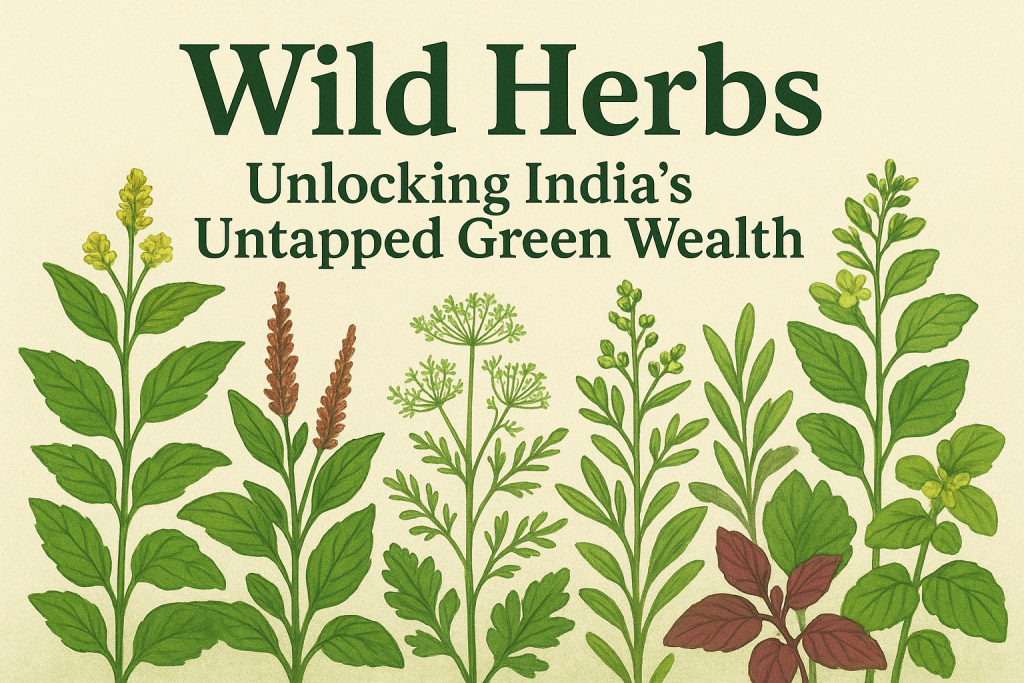
India’s herbal industry is often celebrated for its Ayurveda-based formulations, cultivated medicinal plants, and fast-growing nutraceutical exports. Yet, one of the most underexplored but highly valuable resources of this sector lies in its wild herbs and Minor Forest Produce (MFP).
The Untapped Potential of Wild Herbs
India is home to an extraordinary biodiversity, with nearly 7,500 species of medicinal plants recorded, many of which are sourced from forests and wilderness regions. These wild herbs have been used for centuries by indigenous and tribal communities for their therapeutic, aromatic, and nutritional properties.
In today’s global context, where consumers are seeking authentic, plant-based, and chemical-free solutions, wild herbs present immense opportunities in:
- Pharmaceuticals – as raw materials for natural drug development.
- Nutraceuticals & Functional Foods – immunity boosters, adaptogens, and health supplements.
- Cosmetics & Personal Care – herbal oils, extracts, and bio-actives for sustainable beauty.
- Aromatics & Essential Oils – natural fragrances and wellness products.
- Challenges in Harnessing Wild Herbs
- Despite their potential, wild herbs face critical challenges in India:
- Over-harvesting & Resource Depletion due to unregulated collection.
- Lack of Standardization in processing, storage, and quality control.
- Limited Market Access for tribal and rural collectors.
- Policy & Regulatory Gaps in sustainable trade of Minor Forest Produce.
- Knowledge Gaps in scientific validation and global market positioning.
HEPAI’s Role in Shaping the Future of Wild Herbs
As the apex non-profit trade body for the herbal and natural products sector, HEPAI (Herbs & Herbal Export Promotion Association of India) is uniquely positioned to unlock the future of India’s wild herbs through:
Sustainable Sourcing Frameworks
– Promoting fair trade practices, conservation-driven harvesting, and biodiversity protection.
Empowering Tribal Communities
– Providing training, awareness, and market linkages for tribal gatherers and rural collectors.
Market Development & Global Outreach
– Facilitating trade fairs, buyer-seller meets, and connecting wild herb producers to international buyers.
Policy Advocacy & Regulatory Support
– Working with government bodies to strengthen laws around MFP trade, forest produce rights, and export facilitation.
Research & Validation
– Encouraging scientific studies and clinical validation of wild herbs to meet international safety and efficacy standards.
The Road Ahead: Wild Herbs as India’s Future Green Economy
If harnessed responsibly, wild herbs can become a driver of rural livelihoods, biodiversity conservation, and export growth. The integration of traditional knowledge with modern science, supported by organizations like HEPAI, can transform wild herbs into a sustainable revenue stream for both local communities and the nation.
Wild herbs are not just forest treasures — they are the seeds of a greener, healthier, and more inclusive future for India. 🌿
Conclusion
The future of wild herbs in India depends on responsible utilization, community empowerment, and global positioning. With HEPAI acting as a bridge between tribal wisdom and international markets, India has the opportunity to lead the world in ethical, sustainable, and globally recognized wild herb exports.
Wild herbs are not just forest treasures — they are the seeds of a greener, healthier, and more inclusive future for India. 🌿